Ferragosto Explained: What to Expect in Italy on August 15
On 15 August, Italy does something it rarely does: it stops. Shutters come down over family-run bakeries, motorway service stations fill with cars piled high with beach umbrellas, and entire neighbourhoods in Rome and Milan go quiet enough to hear the pigeons. Ferragosto is a public holiday, but it behaves more like a national reflex. If you happen to be in the country that week, it will shape your trip more than any museum timetable. Here is what the date means, where it came from, and how to spend it well.
Where Ferragosto Comes From
The name carries its own history. Ferragosto descends from the Latin Feriae Augusti, the rest period that Augustus established — traditionally dated to 18 BC — at the end of the summer harvest. After weeks of hard labour in the fields, farmers, oxen and donkeys were given a break. The animals were decorated with flowers, races were run, and the whole peninsula slowed down at roughly the same moment. August already held older rural festivals, and the imperial holiday absorbed them into one long pause.
When Christianity spread across the empire, the date acquired a second identity. 15 August became the feast of the Assumption, the day the Church celebrates Mary being taken into heaven. The religious calendar did not replace the older holiday so much as settle into it. That is why Ferragosto still feels both pagan and Catholic at once: a harvest rest with a Mass attached.
The modern travel habit is younger. In the 1930s, the regime's Dopolavoro organisation ran cheap excursion trains around 15 August so that working families could reach the sea or the mountains for a day. The politics behind those trains is best left to history books, but the behaviour stuck. The gita fuori porta — the day trip out of town — became an Italian institution, and the mid-August departure became something closer to an obligation.
The Assumption, and How Towns Mark It
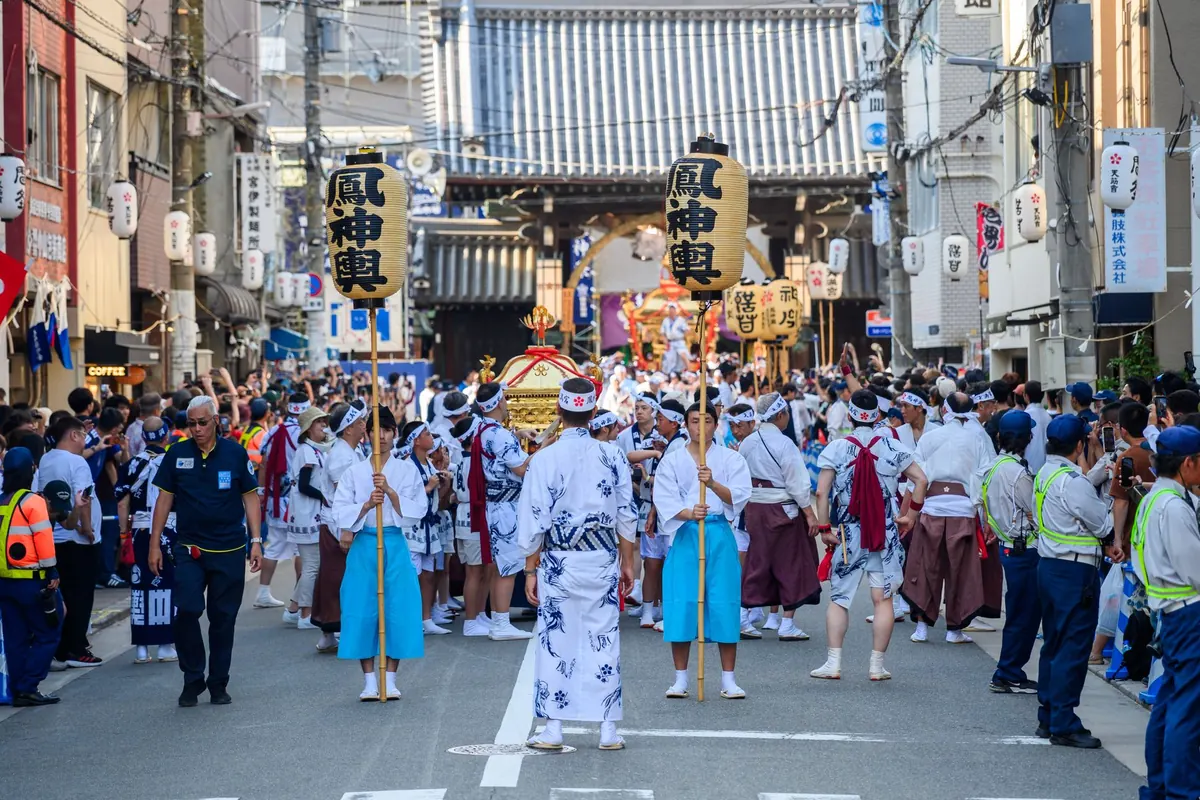
In much of Italy, 15 August begins in church. Parishes hold morning Mass, and in smaller towns the celebration spills into the streets: a statue carried on shoulders, a brass band, older women in dark dresses walking behind, children in white. In fishing towns the procession often heads for the water and the statue is carried to the harbour. In mountain villages it may wind through fields, with a blessing for the harvest. If you find yourself in a place where the local patron saint is celebrated on this date, you have walked into the best version of the holiday — one that has nothing to do with beach clubs.
The greeting you will hear all day is simple: buon Ferragosto. Say it back to the person at the till, the bus driver, the neighbour watering tomatoes at seven in the evening.
How Italy Moves: The Mid-August Exodus
The travel patterns around Ferragosto are unusually concentrated. Italian motorway authorities publish colour-coded forecasts for summer weekends, and the days around 15 August regularly land on the worst of them. The heaviest traffic tends to run on the afternoon and evening before the holiday and again on the morning of 15 August, then reverses as people head home in the following days. If you have any flexibility, travel early in the morning or wait until the 16th.
Ferragosto is less a date on the calendar than a collective decision to stop working.
Public transport switches to the Sunday and holiday timetable, which is thinner than usual and can mean the last bus of the day leaves much earlier than you expect. Ferries to the islands — Sardinia, Sicily, Elba, the Aeolian and Tremiti groups — sell out days or weeks in advance, and the same is true of trains on the main north–south lines.
Meanwhile, the cities empty out. Central Rome in the third week of August is strange and rather lovely: parked cars everywhere, no queue at the bar, a waiter who has time to talk. Offices run on a skeleton staff, many independent shops close for a fortnight, and the neighbourhood that lives on your street may be eating dinner somewhere on the Adriatic.
What Actually Happens on the Day
The classic Ferragosto is a beach day with a very long lunch. Families arrive early to claim space, umbrellas go up in rows, and by one o'clock the sand is dotted with cool boxes. Lidos along the Adriatic and the Tyrrhenian coast take bookings for the day, and turning up at eleven expecting a free umbrella is optimistic. Bring cash for the bar, plenty of water, and a hat you actually like wearing.
If you are invited to a grigliata — a barbecue — say yes. Food is where the holiday becomes specific:
- Anguria: chilled watermelon, sliced at the end of the meal and eaten outside, seeds and all.
- Panzanella in Tuscany and elsewhere: stale bread, tomatoes, cucumber, red onion, basil, oil and vinegar.
- Grilled sausage, ribs and vegetables in the mountains and in back gardens, cooked over charcoal.
- Fried fish along the coast, eaten with lemon and very cold white wine.
- Melon and prosciutto, or peaches in wine, while waiting for the grill.
- A slice of cake or a gelato from the village bar, because the afternoon is long.
Restaurants offer fixed pranzi di Ferragosto, usually four or five courses at a set price. Book several days ahead; the good ones fill up first, and many close in the evening because the staff have been cooking since dawn.
Celebrations Worth Planning Around
The most famous event in the Ferragosto orbit happens the day after: Siena's Palio dell'Assunta, run in the Piazza del Campo on 16 August. Seats in the stands are difficult to obtain and the free space in the middle of the square fills hours before the race; expect heat, crowding and a long wait. It is unforgettable, but it is not a casual stop.
Elsewhere you will find fireworks over harbours, sagre with long tables under string lights, donkey races, greasy-pole contests and processions that have been walking the same route for generations. In alpine areas the day is often spent walking to a rifugio for lunch, with the descent timed to avoid the afternoon storms. None of this is advertised in English, and almost none of it needs to be — ask at the local bar what is happening, and someone will tell you.
Practical Notes for Spending Ferragosto in Italy
- Buy food on 14 August. Supermarkets and many small shops close on the 15th, or open only for a short morning window.
- Book the important things early — ferries, long-distance trains, a restaurant lunch, a lido umbrella. Days ahead for a restaurant, weeks for island crossings.
- Check transport times the day before. Holiday timetables mean fewer buses and earlier last departures, and taxi availability in resort towns is thin.
- Look up opening hours rather than assuming. Many state museums and archaeological sites stay open on 15 August, but local and privately run sights often do not, and hours vary from year to year.
- Plan for heat. Carry water, use sun cream, and move slowly between noon and four. Pharmacies close for the holiday; the farmacia di turno notice on the door tells you which one is covering. For any health concern, speak to a pharmacist or doctor rather than relying on general advice.
- Choose your version of the day. Want crowds and fried fish? Head for the coast and arrive by nine. Want empty streets and a quiet espresso? Stay in the city — it will feel like it belongs to you.
One last thing: do not fight the rhythm. Ferragosto works because everyone agrees to slow down at the same time, and the pleasure of the day comes from joining in rather than working around it. Set out early, eat too much, find some shade, and let the afternoon run long.
Photo: Guohua Song / Pexels